equilibrium
Audiovisual installation, text.
„I heard this story from Rosi Sunya Kjolhede, whose Dharma Talk I listened to on the last day of a meditation retreat at a Zen center. Rosi told a story that had been passed on to her by an Asian man, who in turn had heard it from a Western traveler, Richard Wilhelm, who traveled through China in the early 20th century.
Wilhelm arrived in a region suffering from a drought. The villagers, where he was staying, sent for a rainmaker. When he arrived, they asked him what he needed to perform his task. He replied that all he required was an isolated, empty hut where no one would disturb him. The villagers assured him that they could fulfill his request. The rainmaker locked himself in the hut, and no one saw him for the next three days. After three days, the long-awaited rain arrived. However, it was not a torrential downpour that would wash away the soil and cause flooding but rather a gentle, steady rain that gradually soaked into the parched and hardened earth.
Our traveler, Richard Wilhelm, decided to meet the rainmaker. He recalled that standing before him was a small Chinese man. Wilhelm asked him what he had done to make the rain fall. The rainmaker replied that, in fact, he had done nothing in particular. When he arrived in the area, he felt within himself a strong imbalance in the energy of the elements, manifesting as the drought. Shut away in the hut for three days of solitude, he simply restored balance to the energy within himself in silence. Once he had restored balance within himself, it was also restored in the region—because, according to Buddhist and Taoist teachings, there is no separation between the inner and outer worlds.”
Tomasz Nakonieczny
Our traveler, Richard Wilhelm, decided to meet the rainmaker. He recalled that standing before him was a small Chinese man. Wilhelm asked him what he had done to make the rain fall. The rainmaker replied that, in fact, he had done nothing in particular. When he arrived in the area, he felt within himself a strong imbalance in the energy of the elements, manifesting as the drought. Shut away in the hut for three days of solitude, he simply restored balance to the energy within himself in silence. Once he had restored balance within himself, it was also restored in the region—because, according to Buddhist and Taoist teachings, there is no separation between the inner and outer worlds.”
Tomasz Nakonieczny
The parable of the rainmaker, discovered by chance, becomes a universal story about the search for self in the context of contemporary reality. Do we belong to civilization, or are we, in fact, an element of nature? Does a spiritual dimension of our being truly exist, or is it merely a remedy for those overwhelmed by the pace of mass life?
According to the beliefs of the Far East, we are a mirror of the universe. Everything that exists has its twin essence within us. Reality, therefore, becomes a projection of what is internal. Then, by striving to find inner balance and reconciling with our human identity, are we able to reverse the course of things at the twilight of life on the planet as we know it?
During the work on the project, I was accompanied by a sound recorder for several weeks. I recorded the sounds of water in my immediate surroundings as well as in places I visited for the purpose of the project or entirely unrelated to it. The collected sounds were divided into those that came from natural sources (the hum and rumble of rain, the murmur of a stream, the splash of river waves hitting the shore, and bodily sounds such as the sound of water passing through the throat when swallowing, or expelling it from the body during urination) and those that, due to civilization, have been confined to mechanical frameworks (water overflowing in an automatic washing machine, running from a faucet, humming in a dishwasher, gushing from a city fountain). This became the starting point for creating a modified sound composition, which forms the core of my work. To give voice to the water and allow it to manifest visually, I used the phenomenon of cymatics. The collected sounds, in the form of sound waves, reveal themselves on the surface of the water, like a message encrypted in a code.
According to the beliefs of the Far East, we are a mirror of the universe. Everything that exists has its twin essence within us. Reality, therefore, becomes a projection of what is internal. Then, by striving to find inner balance and reconciling with our human identity, are we able to reverse the course of things at the twilight of life on the planet as we know it?
During the work on the project, I was accompanied by a sound recorder for several weeks. I recorded the sounds of water in my immediate surroundings as well as in places I visited for the purpose of the project or entirely unrelated to it. The collected sounds were divided into those that came from natural sources (the hum and rumble of rain, the murmur of a stream, the splash of river waves hitting the shore, and bodily sounds such as the sound of water passing through the throat when swallowing, or expelling it from the body during urination) and those that, due to civilization, have been confined to mechanical frameworks (water overflowing in an automatic washing machine, running from a faucet, humming in a dishwasher, gushing from a city fountain). This became the starting point for creating a modified sound composition, which forms the core of my work. To give voice to the water and allow it to manifest visually, I used the phenomenon of cymatics. The collected sounds, in the form of sound waves, reveal themselves on the surface of the water, like a message encrypted in a code.
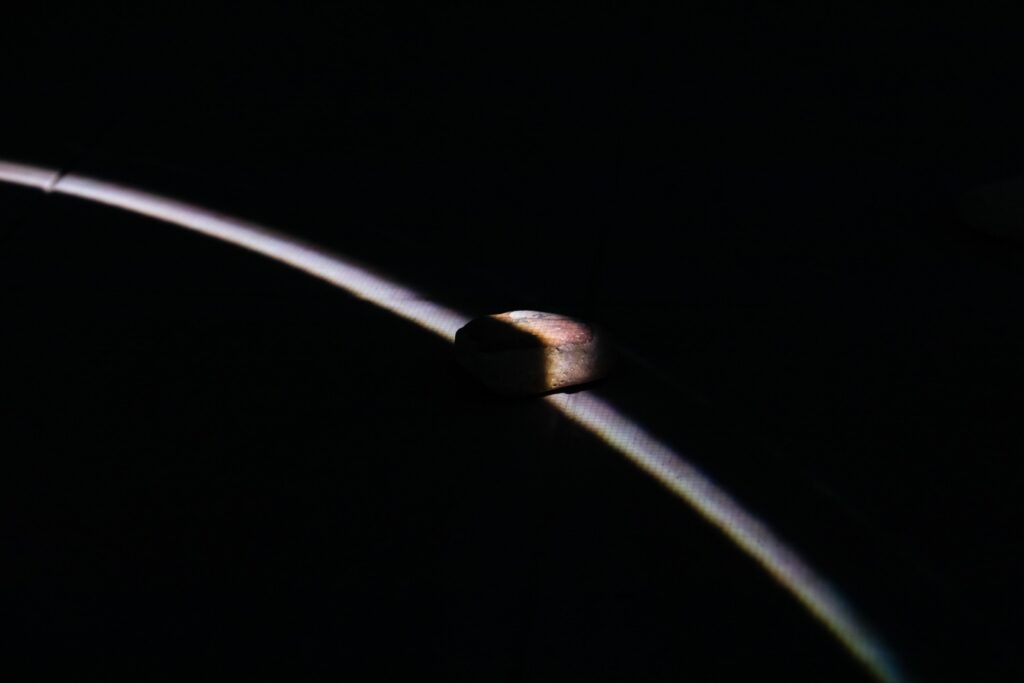
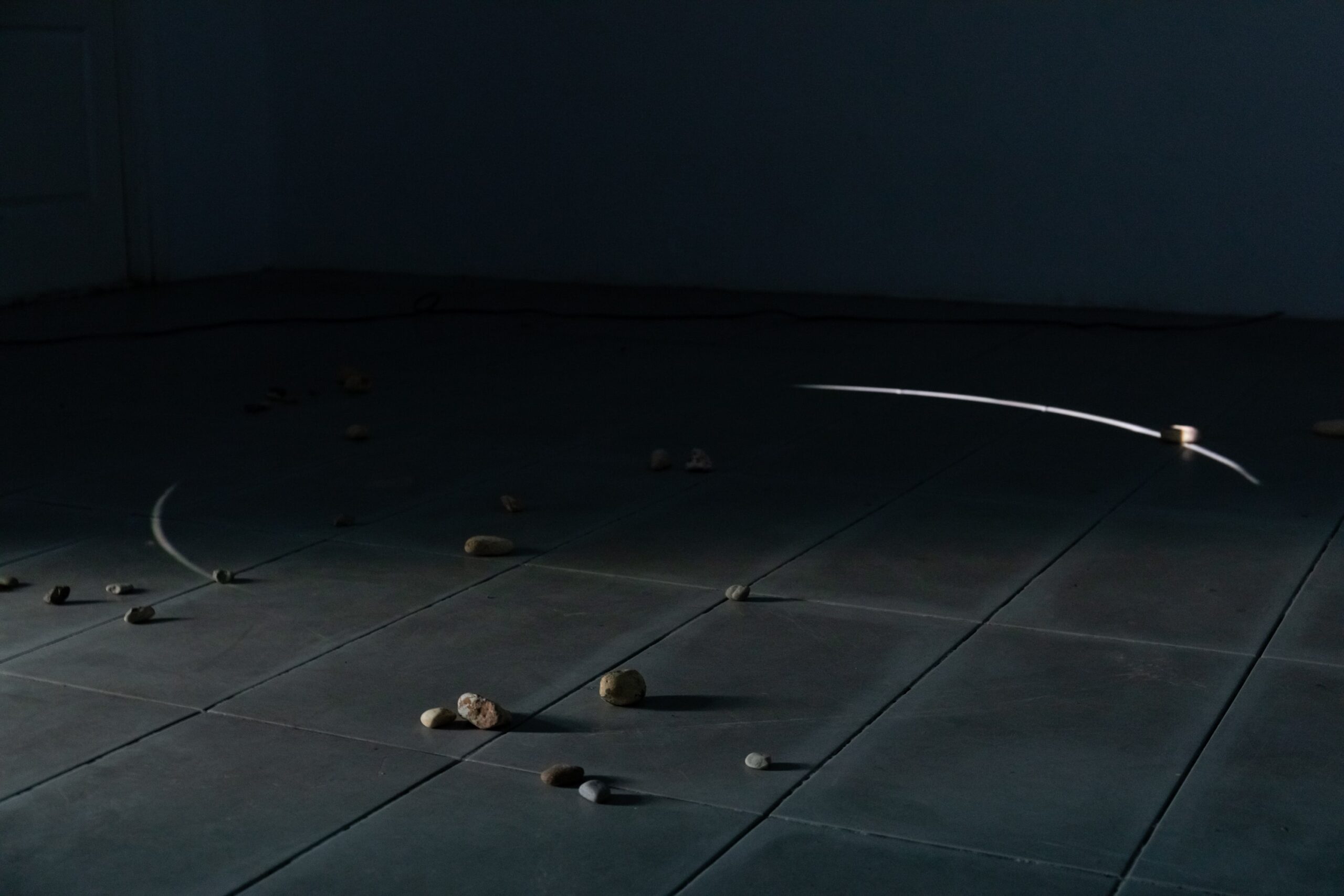
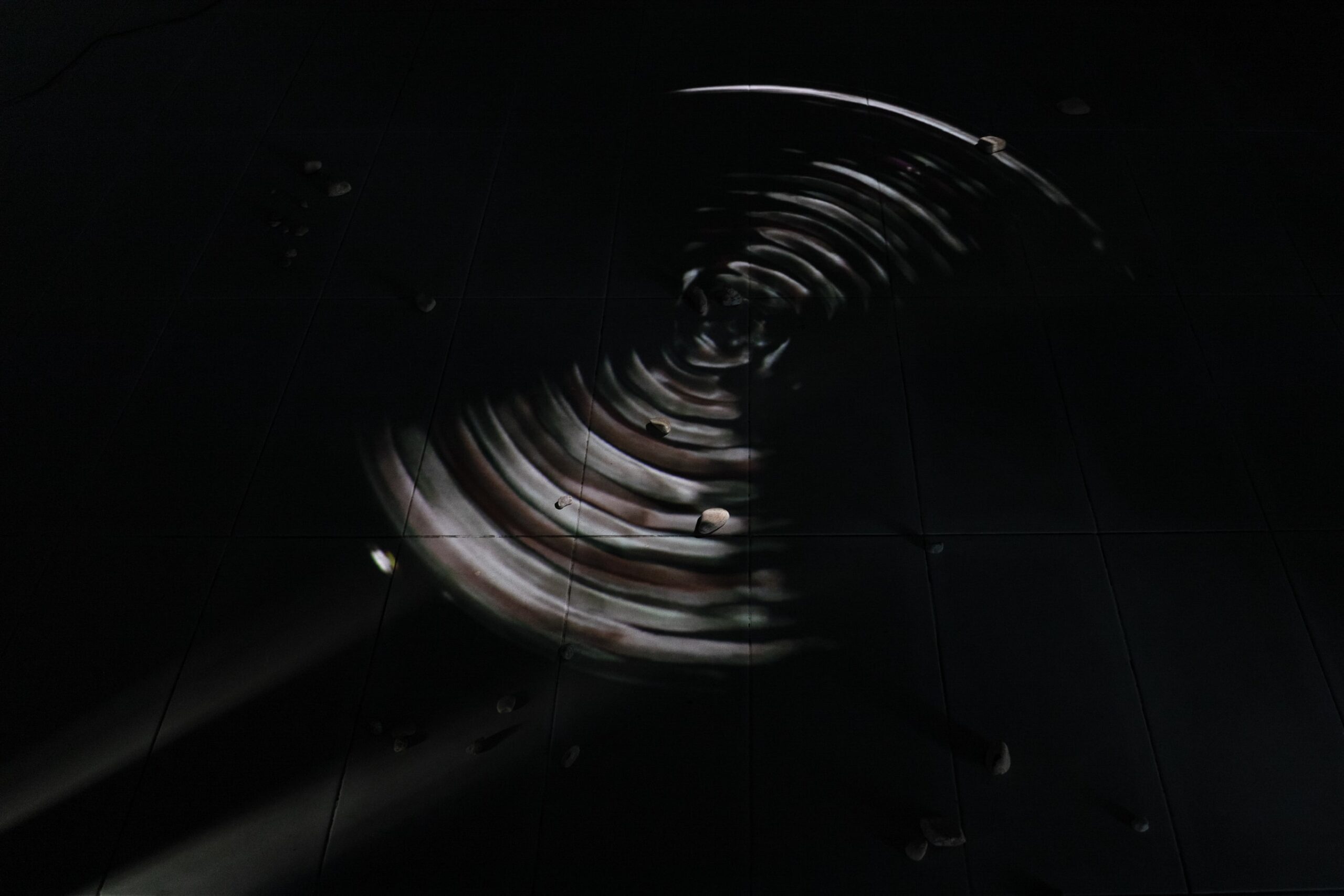
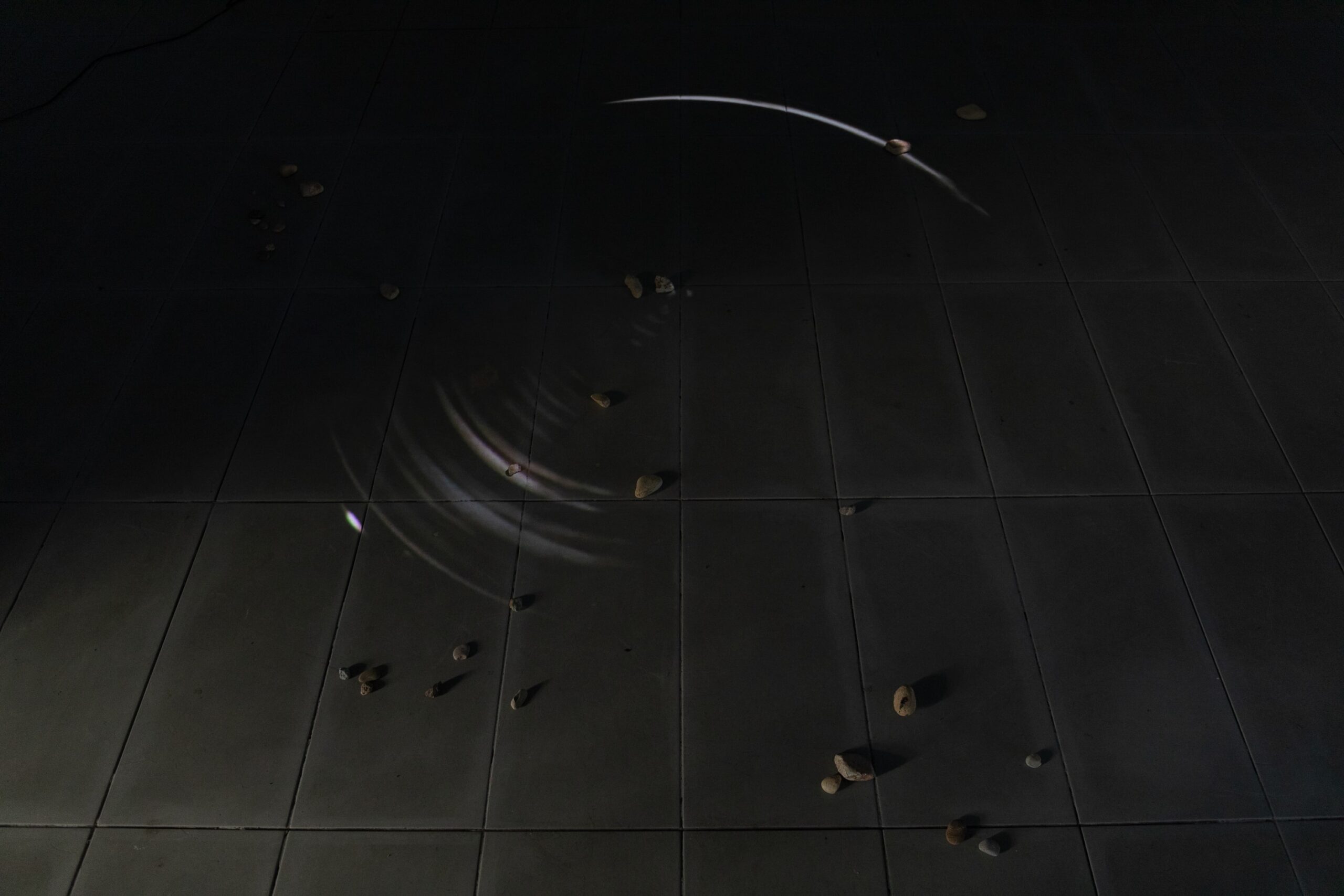
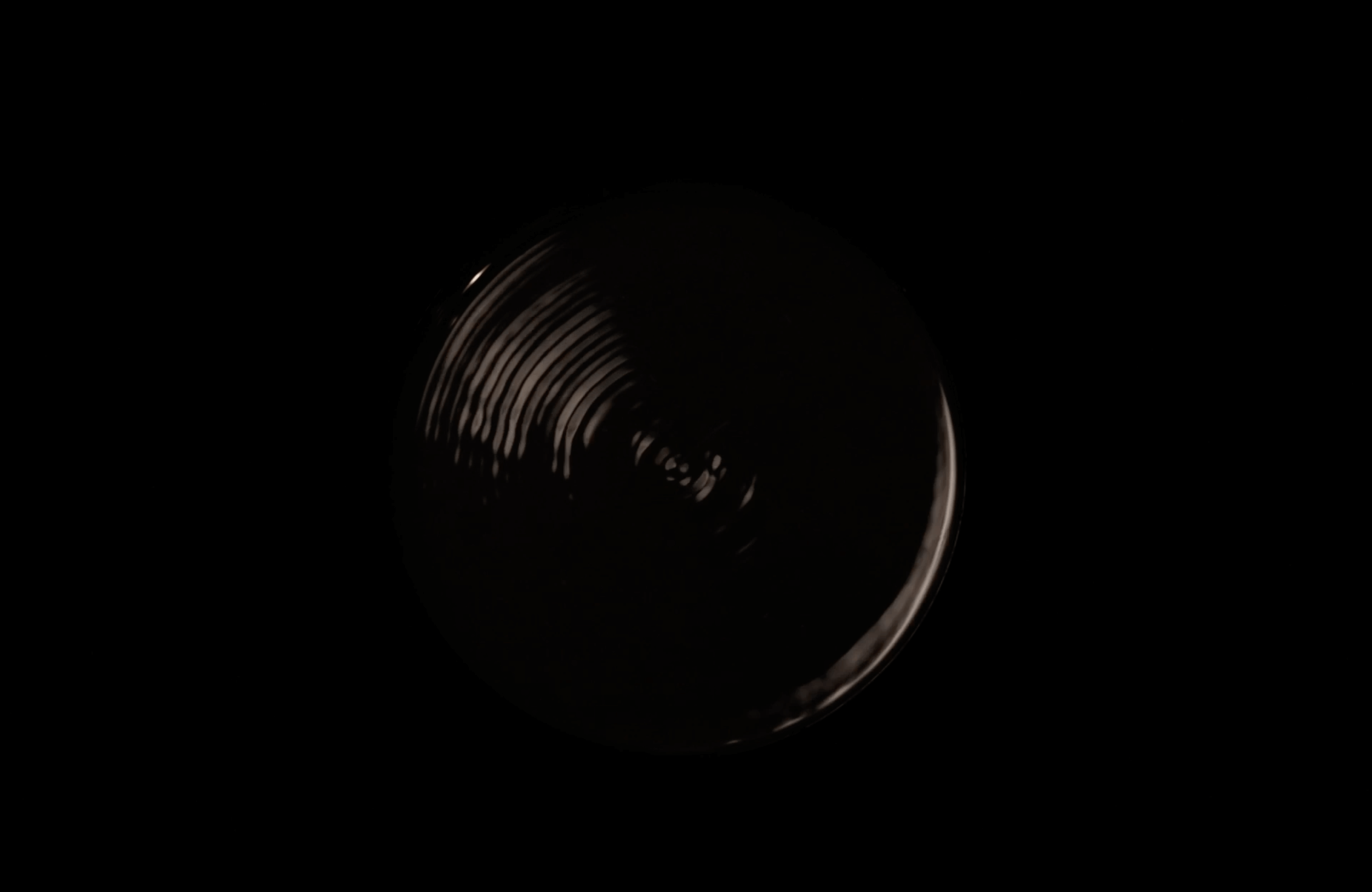
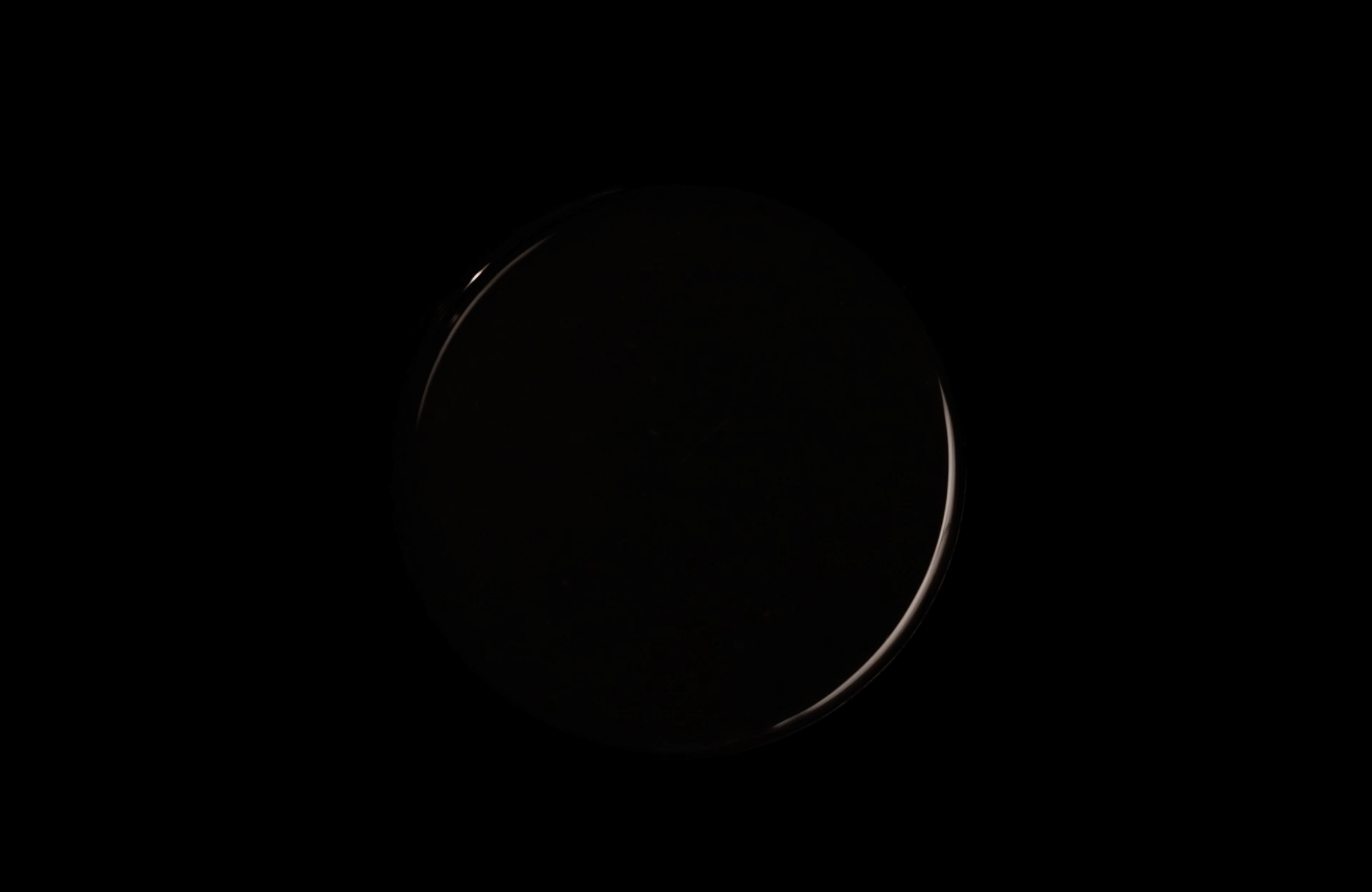
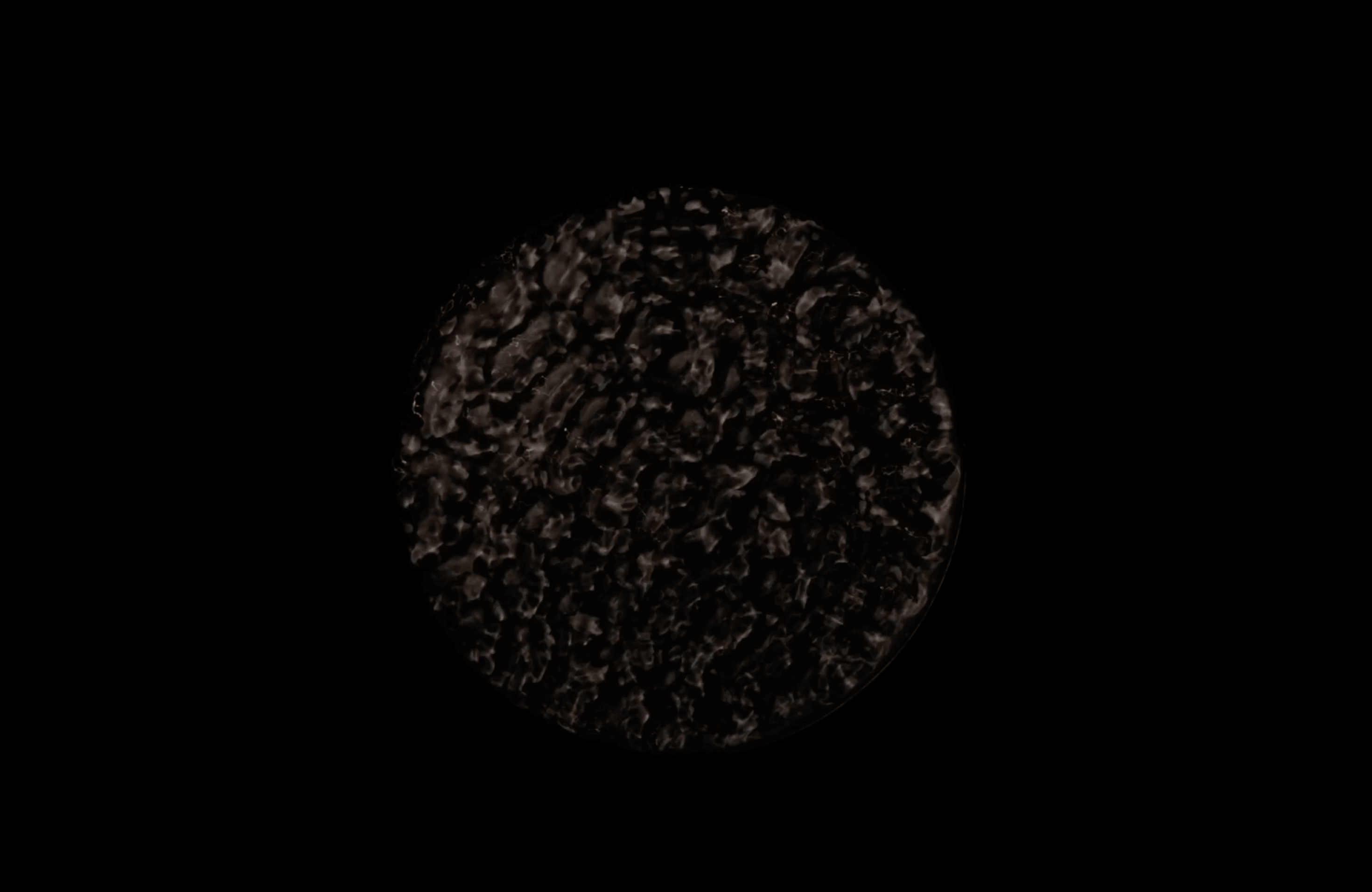
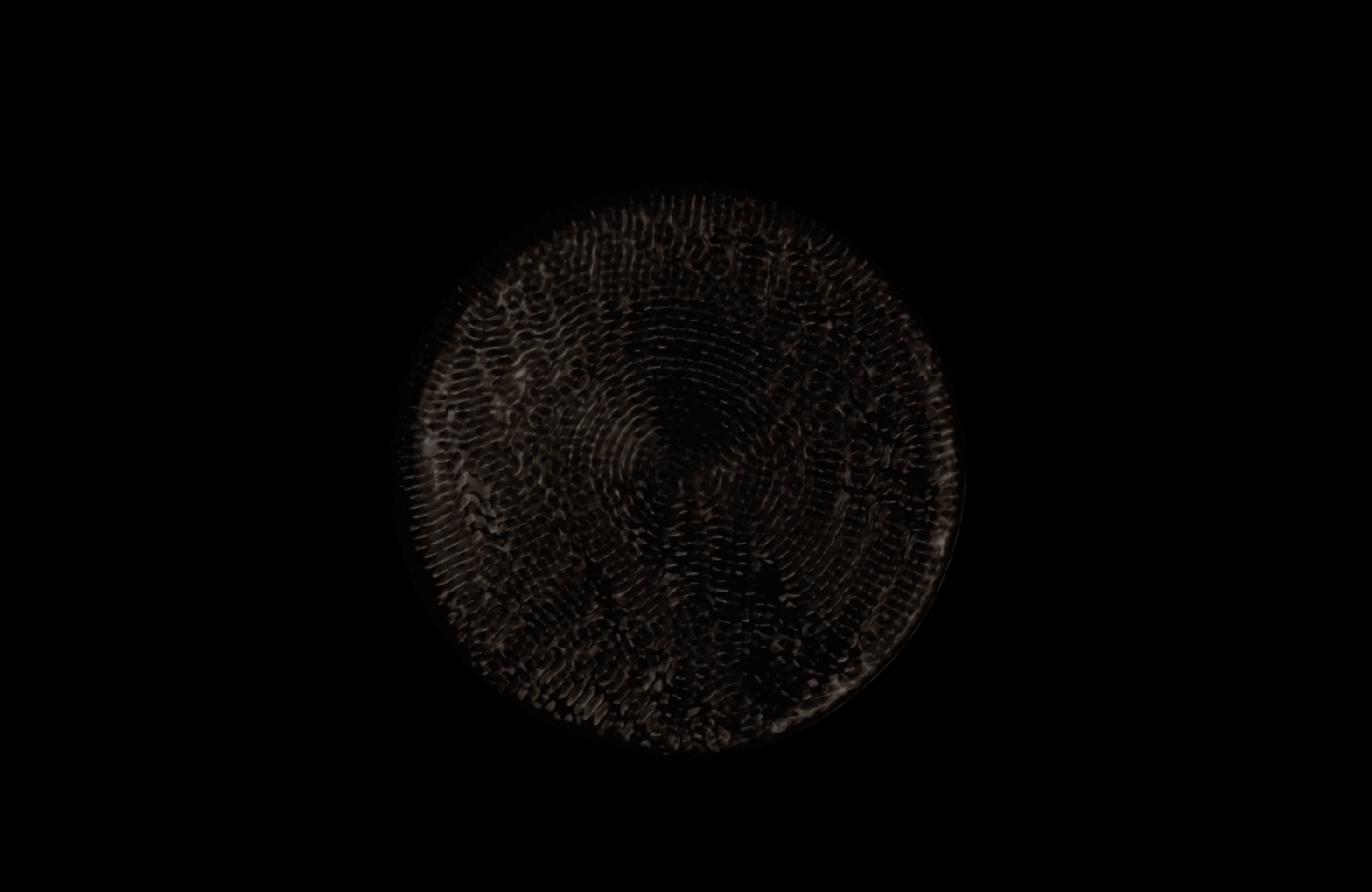
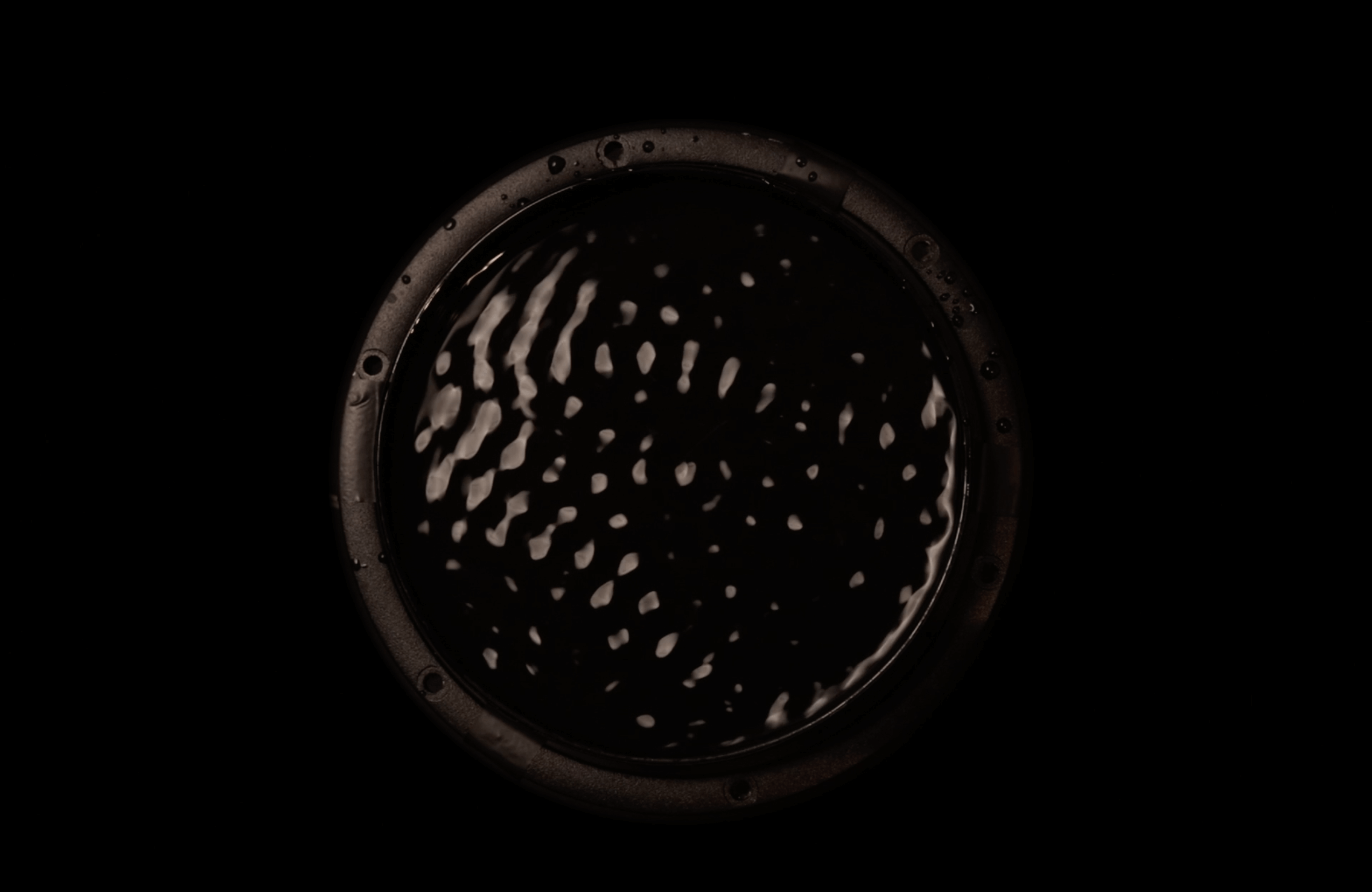
Equilibrium,sound installation utilizing the principles of cymatics, audiovisual projection from a ceiling-mounted projector, pedestal (height: 10 cm, diameter: 100 cm), visualization, 2024.